



A tanker is a large ship used to transport liquid cargo in bulk. The liquid is not stored in drums or containers but directly in large tanks on the ship. Most oil tankers transport large quantities of oil by sea.
Although they look simple, oil tankers have quite complex systems and structures. To understand more about oil tankers, read the full explanation below.
What Is an Oil Tanker Ship?
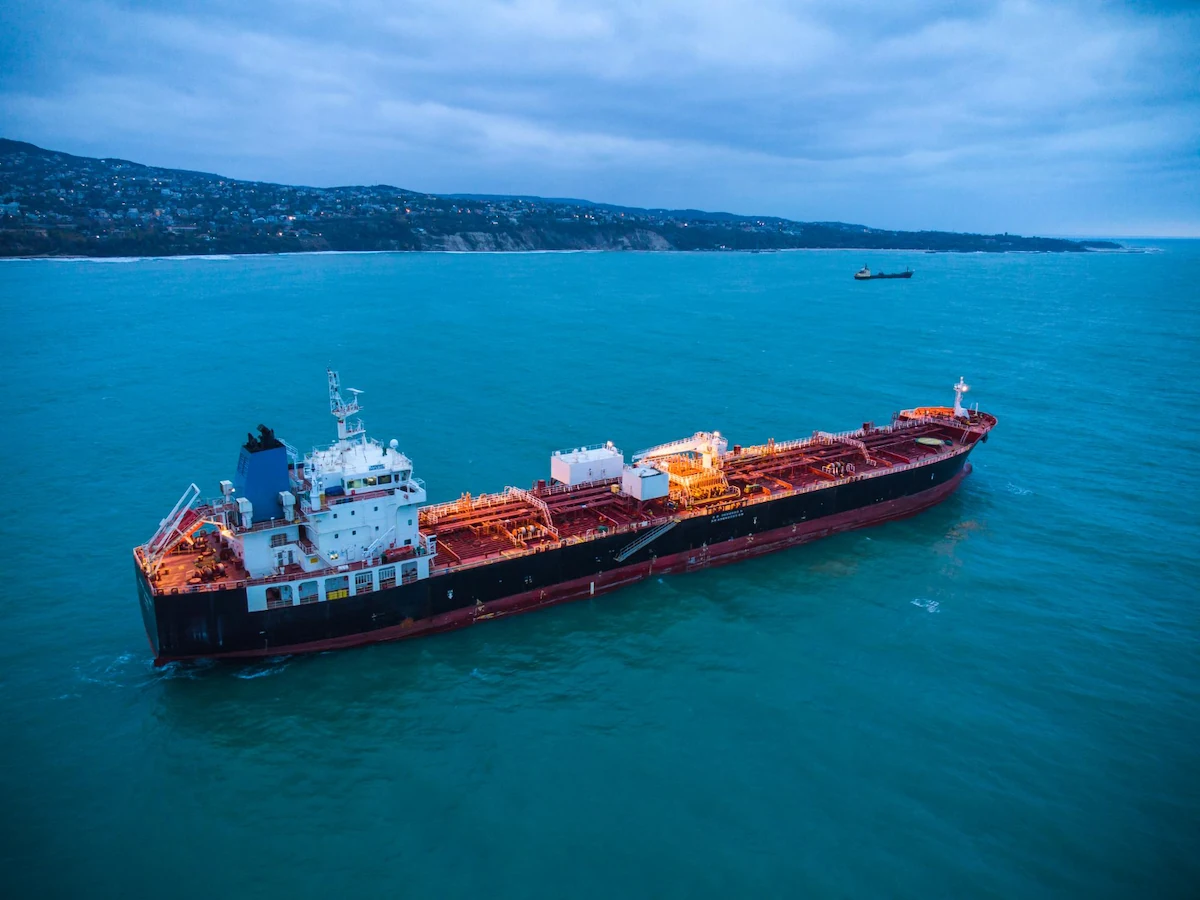
An oil tanker is a special ship designed to transport large quantities of crude oil to various countries.
They vary in size, from smaller ships for short routes to giant ships capable of carrying large loads.
All types of oil tanker ships play an important role in the global distribution of energy. The work process of these ships includes loading crude oil, transporting it across the sea, and unloading the cargo at the destination port.
Oil tanker ships are equipped with specialized technology to maintain the safety and stability of their cargo, such as separate tank systems, customized gas systems to prevent explosions, and double hulls to reduce the risk of leakage.
Oil tanker ships connect production areas, often located offshore or in remote areas, with refineries. It is at these refineries that crude oil is processed into various products. The sea lanes traveled by these ships are important trade routes between countries.
The role of the oil tanker ships in Indonesia is not limited to transportation, as it also reflects the connection among global energy needs, marine technology development, and world economic conditions.
Given their strategic role, the implementation of safety and environmental protection standards is essential.
Types of Oil Tanker Ships
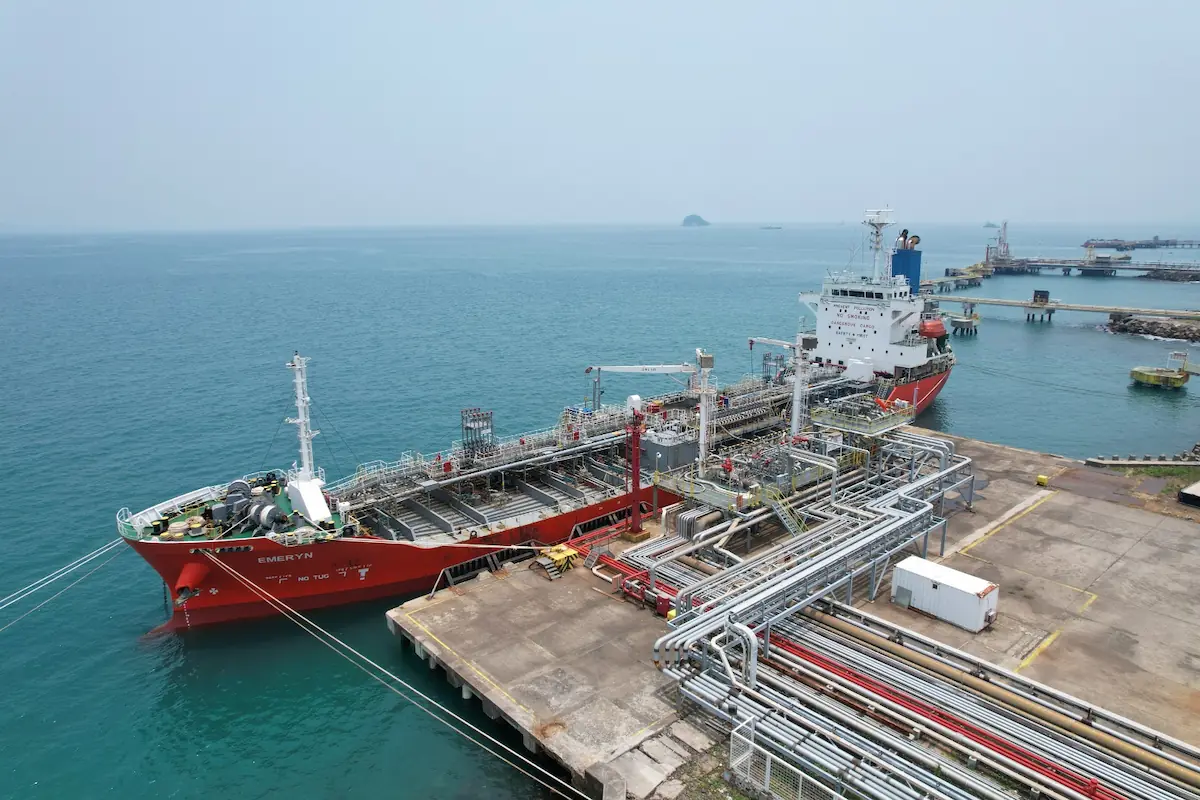
In addition to being classified as crude oil tankers and product tankers, oil tankers can be further grouped by function and size.
Some ships specifically transport oil from one port to another. On the other hand, there are also offshore refueling ships that deliver and refuel other ships while they are still at sea.
In fact, ships that are too old or no longer efficient to operate are sometimes converted into floating oil storage facilities.
In the world of oil transportation, several important terms are often used to describe the types and sizes of oil tankers, including:
- Double Hull: A ship design with two layers of hull. This system is mandatory on new ships because it provides additional protection in the event of a collision. This reduces the risk of oil spills.
- DWT (Deadweight Tonnage): A measure of the maximum load a ship can carry, including cargo, fuel, equipment, and ballast water. It is usually calculated in metric tons.
- OBO (Ore-Bulk-Oil Carrier): A ship that can carry oil as well as other cargo, such as iron ore, so that it can still carry cargo on its return voyage.
- LR1/LR2 (Large Range 1 and Large Range 2): Categories with oil tanker capacities of approximately 45,000–80,000 DWT for LR1 and 80,000–159,999 DWT for LR2.
- VLCC (Very Large Crude Carrier): A very large crude oil carrier with a capacity of 160,000 to 319,999 DWT. Included in the supertanker group.
- ULCC (Ultra Large Crude Carrier): The largest oil tanker with a capacity of over 320,000 DWT and one of the largest seagoing vessels operating in the world.
Read also: CDI Group Strengthens Chemical Industry Supply Chain with Launch of New Chemical Logistics Vessel
How to Unload and Load Oil Tanker Ships
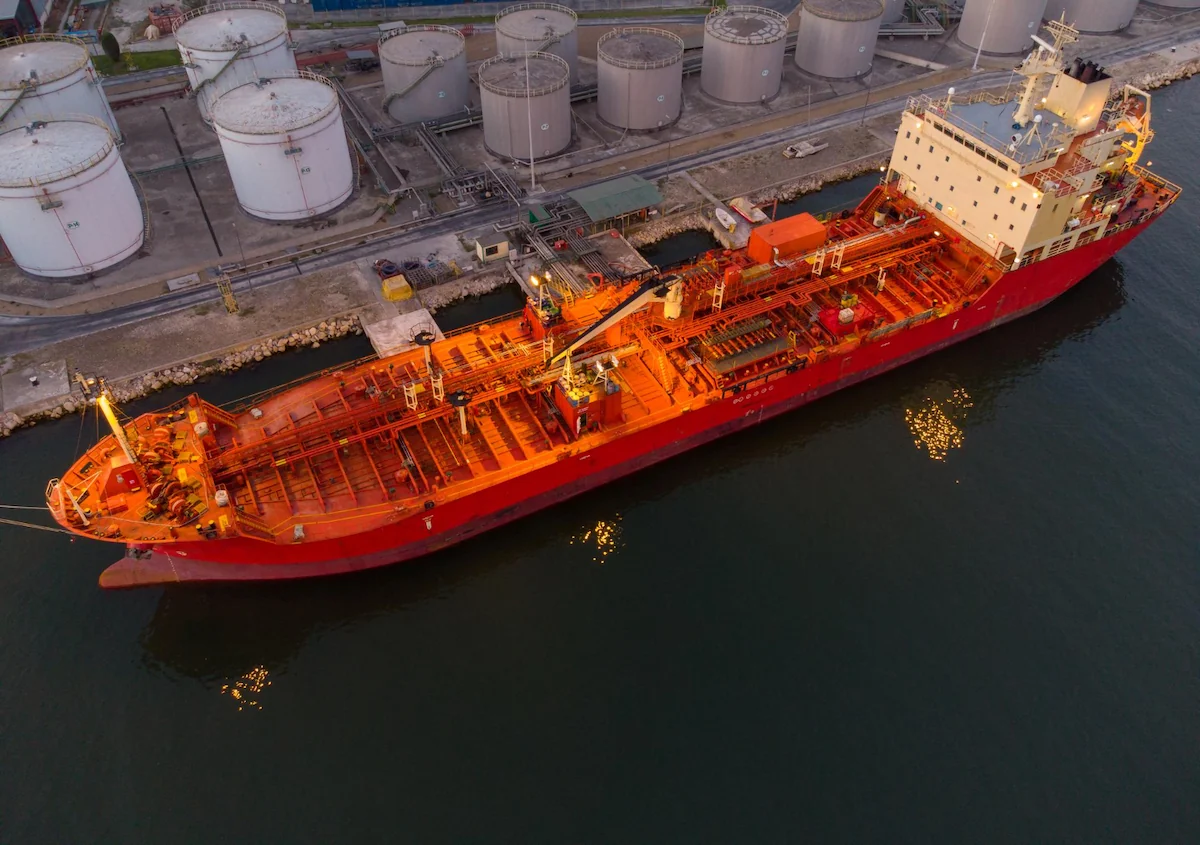
In oil tanker operations, two main processes are very important: loading oil onto the ship and unloading it upon arrival at its destination. Both must be carried out with strict procedures to ensure safety, efficiency, and environmental protection. Here is the explanation:
1. How Oil is Loaded onto Ships
Oil must be transferred between the ships and onshore facilities. Several methods are commonly used to do this.
If the ship is docked, the oil is transferred using a special pipe called a marine loading arm or a large hose (cargo hose). This device pumps the oil directly into the ship's tanks.
On the other hand, if the ship is not docked at the pier but is offshore, an underwater hose connected to a special buoy is usually used.
There is also a method called lightering. This method involves transferring oil from one ship to another using a connecting hose.
When the pumping process begins, the oil flow is run slowly at first. The purpose is to ensure that all connections are properly installed and the equipment is working properly. Once it is confirmed to be safe, the pump pressure will be increased steadily.
During the process, measuring equipment is used to determine the amount of space remaining in the tank. Clear communication between the ship's crew and shore personnel is also very important to ensure that the oil transfer process is safe and controlled.
2. How to Unload Oil at the Destination
When the oil tanker ship arrives at its destination port, the discharge or unloading process is carried out in several stages to ensure it is safe and smooth.
First, the ship is securely moored at the dock. After that, a special hose or pipe arm is attached to the part of the ship that serves as the oil outlet. Oil from inside the ship's tank is then pumped to a storage tank on land.
During the process, the ship's crew continuously monitors oil pressure and flow to prevent leaks or spills. Various safety systems are also used to reduce the risk of disruption. All these steps are important to ensure that oil unloading is carried out in accordance with regulations.
Trust Chandra Daya Investasi for Your Marine Logistics
That concludes our explanation of oil tanker ships, from their definition to how they are loaded and unloaded. Oil tankers play an important role in distributing energy to various regions around the world. In addition to their large size, these ships are also equipped with special safety systems and technology to ensure safe and efficient transportation.
If your company needs marine logistics services for chemicals, LPG, or oil, Chandra Daya Investasi, as #YourGrowthPartner, is ready to be a reliable partner in supporting your business growth by providing solutions in the marine logistics sector.
Through PT Chandra Shipping International (CSI), we operate more than 10 LPG and chemical carriers with a capacity of up to 106,650 DWT. This fleet continues to grow in line with distribution needs, ensuring smooth and on-time deliveries.
With modern technology and a professional workforce, Chandra Daya Investasi provides safe, efficient, and sustainable marine logistics solutions.
Entrust your maritime transportation needs to Chandra Daya Investasi to ensure your company's operations remain stable and your business continues to grow.
Read also: New Chemical Vessels to Boost Indonesia’s Role as Regional Chemical Distribution Hub