



Wastewater, whether from industrial or domestic sources, can cause water and soil pollution if not properly treated. As a result, every sector that generates wastewater needs to manage it safely and in an environmentally friendly manner.
This is where wastewater treatment plants (WWTPs) come in. A WWTP is a facility that treats wastewater through various stages, making it reusable for industrial needs or dischargeable into rivers without polluting the environment.
This article discusses the ins and outs of a wastewater treatment plant. So, read this article to the end to learn more!
What Is a Wastewater Treatment Plant (WWTP)?
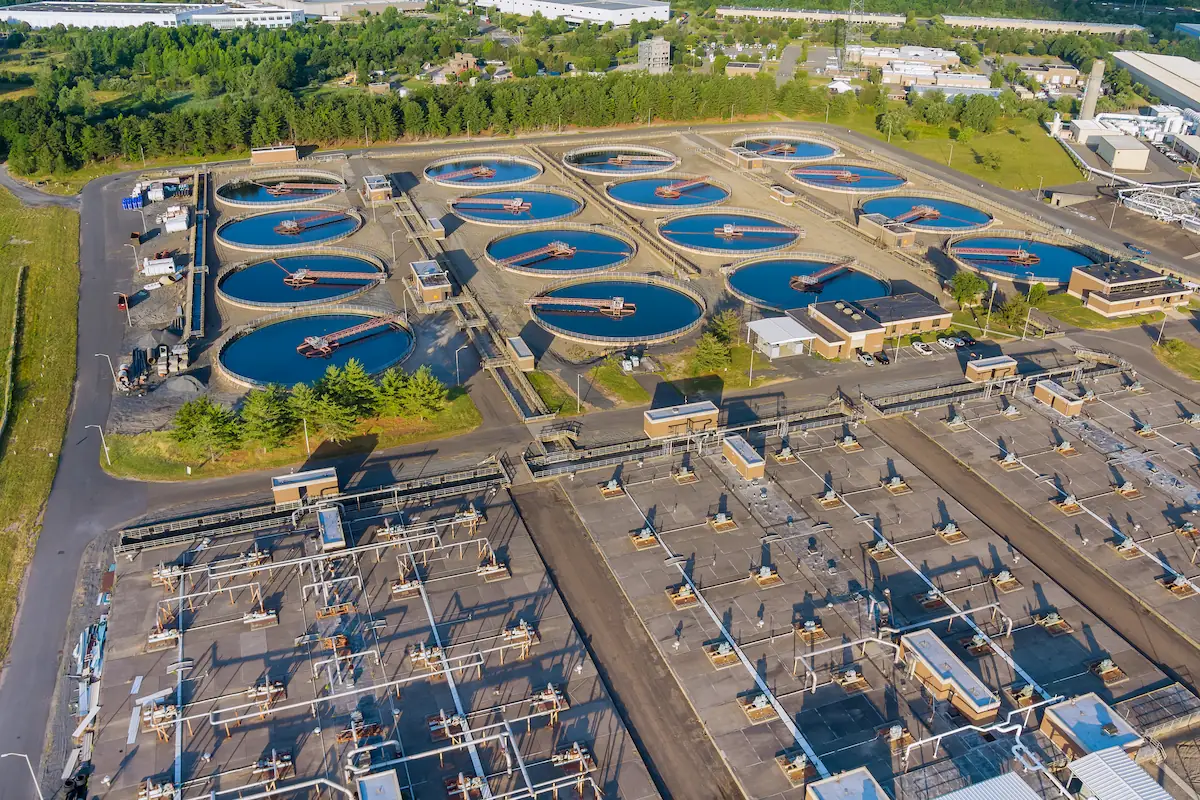
A wastewater treatment plant (WWTP) is a structure specifically designed to clean wastewater, such as water from industrial operational processes and water containing contaminants from daily activities.
Wastewater can come from human activities, such as water contaminated with food residues, soap, oil from cooking processes, urine, and feces.
Additionally, factory operations and agricultural activities can also produce wastewater. It will later be collected in a wastewater treatment plant for further processing before being discharged or reused.
The existence of WWTPs is very important for communities and industries. In fact, the Indonesian government has regulated wastewater treatment in the Environmental Protection Law (PPLH) Number 31 of 2009.
That is why every company must have its own wastewater treatment plant in accordance with regulations and environmental quality standards. Wastewater released into the environment or reused for operations must also comply with specified parameters, such as ammonia, bacteria, and pH levels.
Read also: Advancing Infrastructure Integration, CDI Group Builds Bitumen Tank Facilities
Why Is a Wastewater Treatment Plant Important?
As previously explained, a wastewater treatment plant treats wastewater to make it safe and environmentally friendly. Furthermore, WWTPs help protect ecosystems, such as rivers and swamps, from water pollution due to various stages of treatment applied to the wastewater.
Moreover, WWTPs also maintain the quality of life for communities living near water sources and using them for daily needs. WWTPs remove chemicals, bacteria, and contaminants from wastewater, making it safer to reuse, including by other living beings.
Furthermore, WWTPs can support the circular economy, where treated wastewater can be used for other factory operations instead of being discharged.
Types of Wastewater Treatment Plant
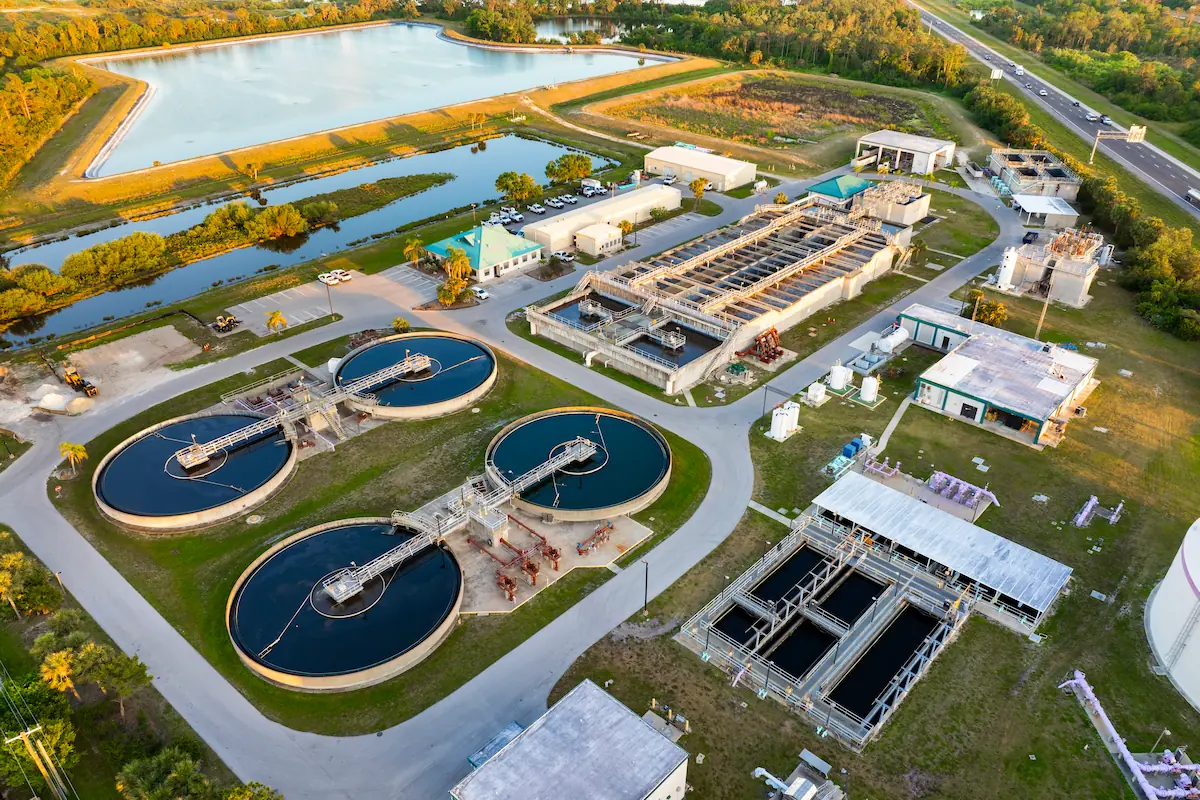
There are several types of wastewater treatment plants (WWTP) according to their purpose, such as:
1. Industrial WWTP
An industrial WWTP is a facility designed to treat water used during operational processes, either in companies or factories.
Because every factory has wastewater with a unique composition and set of characteristics, an industrial WWTP is customized to meet the needs of each business. For example, a WWTP for a plastic factory will be different from a pharmaceutical factory.
An example of an industrial wastewater treatment plant is the water solutions service from Chandra Daya Investasi. As #YourGrowthPartner and a subsidiary of the Chandra Asri Group, Chandra Daya Investasi provides wastewater treatment through Krakatau Tirta Industri (KTI).
Our water solutions ensure compliance with environmental quality standards and enable the reuse of treated wastewater. KTI manages the operation and maintenance of the Biotreatment Blast Furnace Wastewater Treatment Plant at the PT Krakatau Steel Complex, which has a capacity of 32 m³/hour and utilizes a biological water treatment process.
Moreover, PT Krakatau Blue Water, a joint venture between KTI and Blue O&M Ltd., also operates the final wastewater treatment plant with a capacity of 17,000 m³/day. Furthermore, KTI also treats building wastewater to be reused in the building's cooling system.
2. Communal WWTP
A communal WWTP is a facility responsible for processing wastewater in a specific area. Typically, it is found in densely populated housing areas or apartment complexes. Communal WWTPs are generally managed collectively by an organization or local authorized administrators.
Each waste disposal system is linked to a channel that connects to a central communal WWTP. This type is suitable for areas where it is not feasible to use individual WWTPs, considering that it needs to be installed at specific distances and depths.
3. Independent WWTP
An independent WWTP is a simple wastewater treatment plant commonly found in homes or private buildings. Its capacity is adjusted according to the number of building occupants. Residents are responsible for managing their own WWTP.
4. Hospital WWTP
This WWTP is specifically designed to treat medical waste from hospitals. This is because medical waste can contain drugs, chemicals, bacteria, and infectious viruses.
5. Agricultural WWTP
An agricultural WWTP is used to treat wastewater from agricultural activities, such as livestock manure or the processing of farm products.
Read also: Creating Productive Land through Solar Energy: CDI Group Operates Ground-Mounted Solar Power Plant
Wastewater Treatment Plant Stages
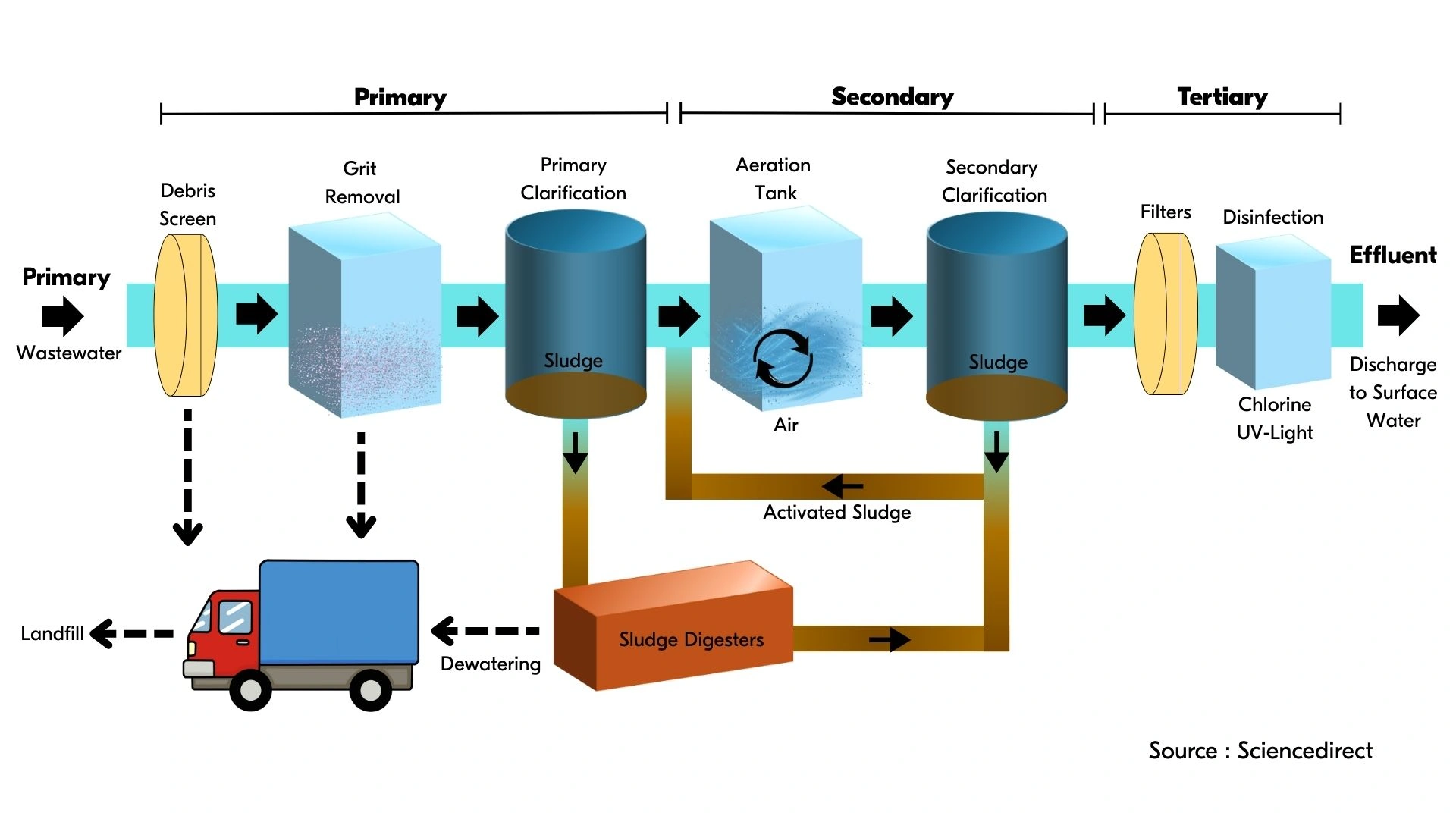
There are several stages in wastewater treatment, such as chemical, physical, and biological stages. Here is a detailed explanation:
1. Preliminary Treatment
First, wastewater is screened to separate solids, such as gravel, wood, plastic, sand, and others. If not separated, these solids can damage the equipment. At this stage, some WWTPs also remove grease using a degreaser.
2. Primary Treatment
After the water is free from large particles, it will undergo primary treatment to remove remaining solids, such as fine sand. Common methods used at this stage include sedimentation and flocculation.
The wastewater will be settled until fine particles either float on the water surface or sink to the bottom of the container. As a result, the sediment can be removed. At this stage, base and acid agents are also added to neutralize the pH.
3. Secondary Treatment
This stage is carried out biologically using microorganisms to remove organic substances from the wastewater. One of the most common methods at this stage is activated sludge.
The bacteria in the activated sludge will consume the organic substances in the water. The conditions can be adjusted as needed, either aerobically or anaerobically. Once the process is complete, the water will be filtered from the sludge and processed to the next stage.
4. Tertiary Treatment
The wastewater will be improved in quality to make it safer for reuse or for discharge into waterways. You can disinfect it with chemicals such as chlorine, filter it through layers of sand, or use UV light.
5. Disposal or Reuse
Wastewater that meets safety standards can be discharged into rivers or the sea or reused for company operational processes, such as for factory machinery cooling systems or power plants.
That is the information regarding the wastewater treatment plant (WWTP) that needs to be understood. This facility plays an important role in maintaining cleanliness, safety, and environmental sustainability.
If your company requires industrial wastewater treatment services, trust Chandra Daya Investasi and our affiliate company, Krakatau Tirta Industri!
Read also: CDI Group Strengthens Chemical Industry Supply Chain with Launch of New Chemical Logistics Vessel