



An oil spill in a water body can cause a serious impact on the environment. Thus, we need special equipment to manage the spill and prevent it from expanding.
One of the components widely used to handle an oil spill in a water body is an oil boom. Want to know more about an oil boom and how it works? Read the complete information below!
What Is an Oil Boom?
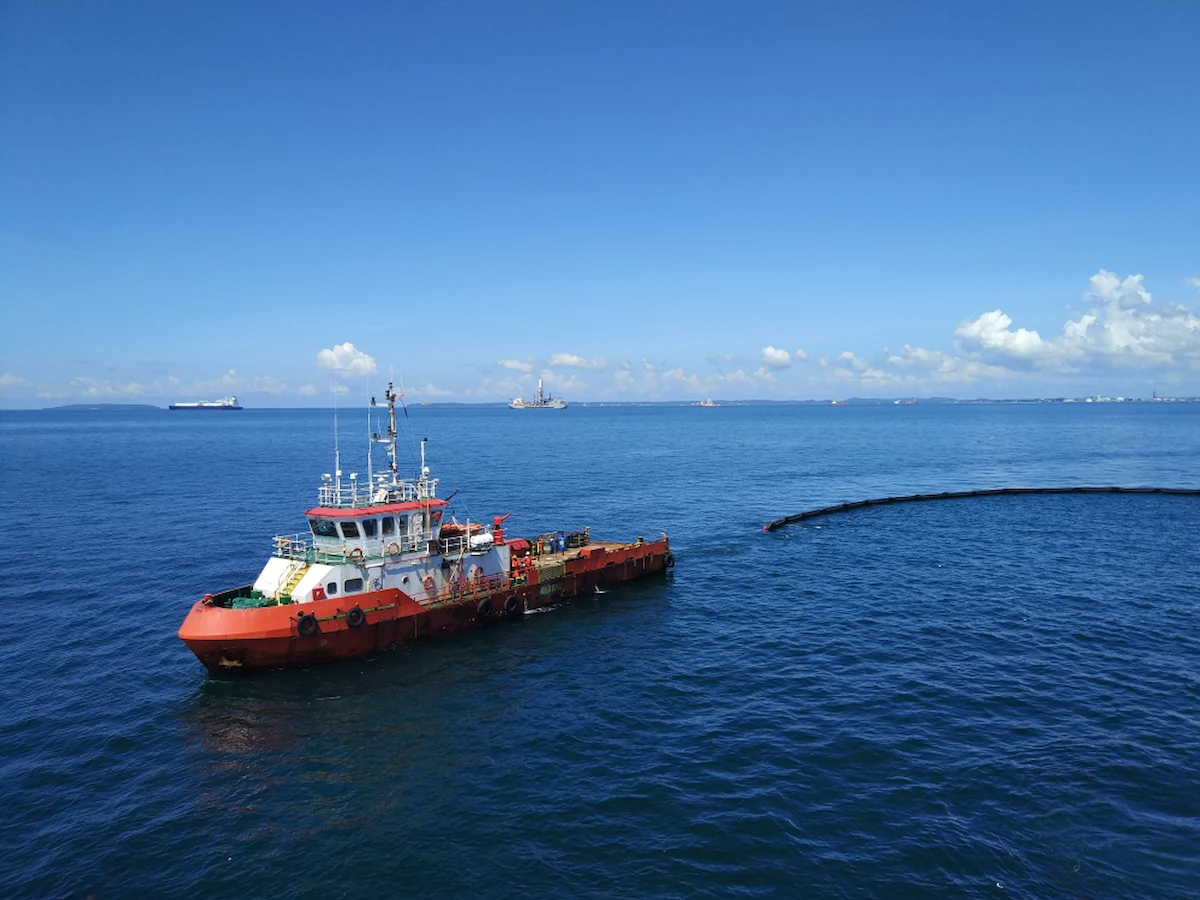
Oil boom equipment is used to manage and limit the spread of an oil spill in a water body, such as a sea, river, or port. It is usually in the form of floating barriers placed on the water surface to hold the oil, preventing it from spreading further.
In general, an oil boom has several primary parts, such as floats that keep it afloat, skirts that hang underwater to contain the oil, and weight chains that stabilize the boom.
The way an oil boom works is quite simple. When an oil spill happens, an oil boom is placed around or toward the affected area to stop the oil from spreading.
The boom then contains the oil on the water’s surface because oil has a lower density than water and thus floats on top. Once the oil has been contained within the area bounded by the oil boom, the cleanup process can proceed using other tools, such as skimmers or absorption methods.
Read also: CDI Group Officially Listed on IDX to Support Southeast Asia’s Expanding Infrastructure Needs
Types of Oil Booms
When cleaning up oil spills in water, oil booms are used for different purposes depending on what is needed to control the oil and clean it up. In general, there are two oil booms that are commonly used
1. Oil PVC Containment Boom
An oil PVC containment boom is made of strong and waterproof materials and is effective in bounding oil spread on the water surface. It is used to handle large-scale oil spills because it can be stretched out up to hundreds of meters. It is also reusable and reliable for choppy water bodies.
Typically, a single unit of a PVC oil containment boom is approximately 15–20 meters long per section and is equipped with connectors at each end. Using these connectors, multiple booms can be connected to adjust their length according to on-site requirements.
2. Oil Absorbent Boom
An oil absorbent boom is a type of oil boom designed to both absorb and contain oil spills on the water’s surface. It is typically made of absorbent materials such as synthetic fibers or polypropylene, which can absorb oil without absorbing water.
This type of boom is generally used during the cleanup phase after the oil has been successfully contained using an oil containment boom. It helps get rid of leftover oil from the water's surface more effectively because it can soak up water.
However, the oil absorbent boom is designed as a single-use product and therefore cannot be reused like a PVC oil containment boom.
Read also: Chandra Daya Investasi Affirms No Plans for ExxonMobil Indonesia Acquisition
How to Use an Oil Boom
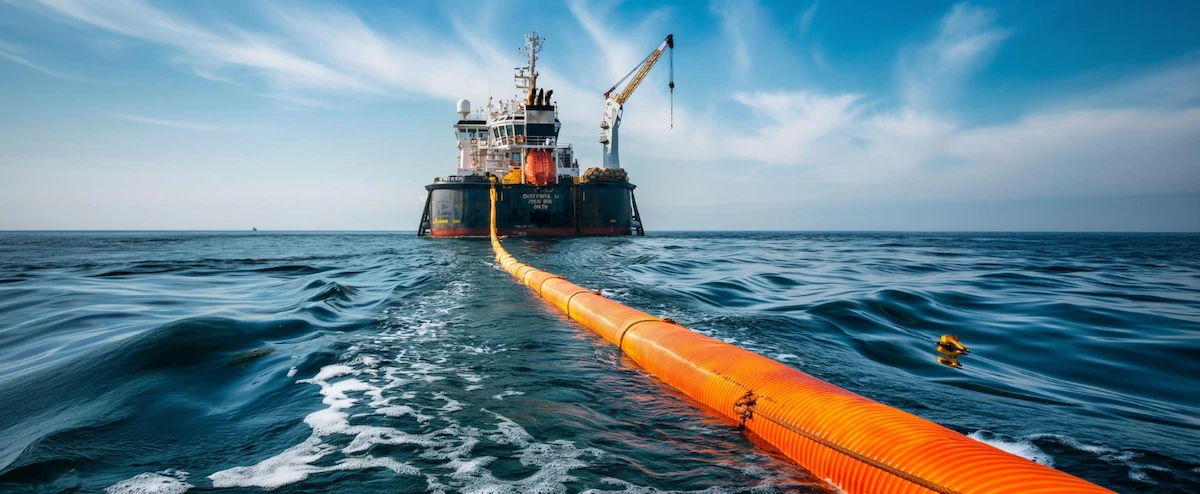
The oil boom must be utilized properly to manage oil spills effectively. Here are several common methods for using oil booms:
1. U Configuration
One of the methods for using oil booms is making a curvy configuration, like a U shape, on the water surface. You can install the boom in the shape of a U to direct and collect oil to a certain point using two boats.
2. U Double Sweep Oil Boom
This method is a development of the U configuration, using two series of oil boom vessels at once. In this configuration, the oil boom is installed in the shape of a double U on the left and right of ARM/JIB-equipped vessels, surrounding the oil spills.
3. J Oil Boom Configuration
Basically, the J oil boom configuration is almost similar to the U configuration. However, the tip of the boom is longer than the U configuration, allowing it to maneuver the spill into one collecting point.
Secure Port Solutions with High Safety Standards
The use of oil booms is critical to ensure operational safety in waterways, particularly in port areas and maritime logistics operations. By handling and controlling oil spills, oil booms minimize the risk of pollution while protecting aquatic ecosystems.
As #YourGrowthPartner, Chandra Daya Investasi, through PT Redeco Petrolin Utama (RPU), provides port and petrochemical feedstock storage solutions with high operational safety standards.
RPU ensures service safety in accordance with international standards for fire and safety, including the use of oil booms as part of the environmental safety system in the event of an oil spill in water areas.
Currently, RPU manages two docks, each with an LOA of 200 meters, capable of serving ships up to 35,000 DWT with a draft of 10 meters. Additionally, there are 72 storage tanks with a total capacity of 130,000 m³.
Furthermore, RPU also provides other essential assets, such as a centralized fueling station for tankers and a customer order service system.
Entrust your company’s port services and petrochemical raw material storage needs safely to Chandra Daya Investasi!
Read also: CDI Group Announces IPO, Ready to Strengthen Regional Infrastructure